
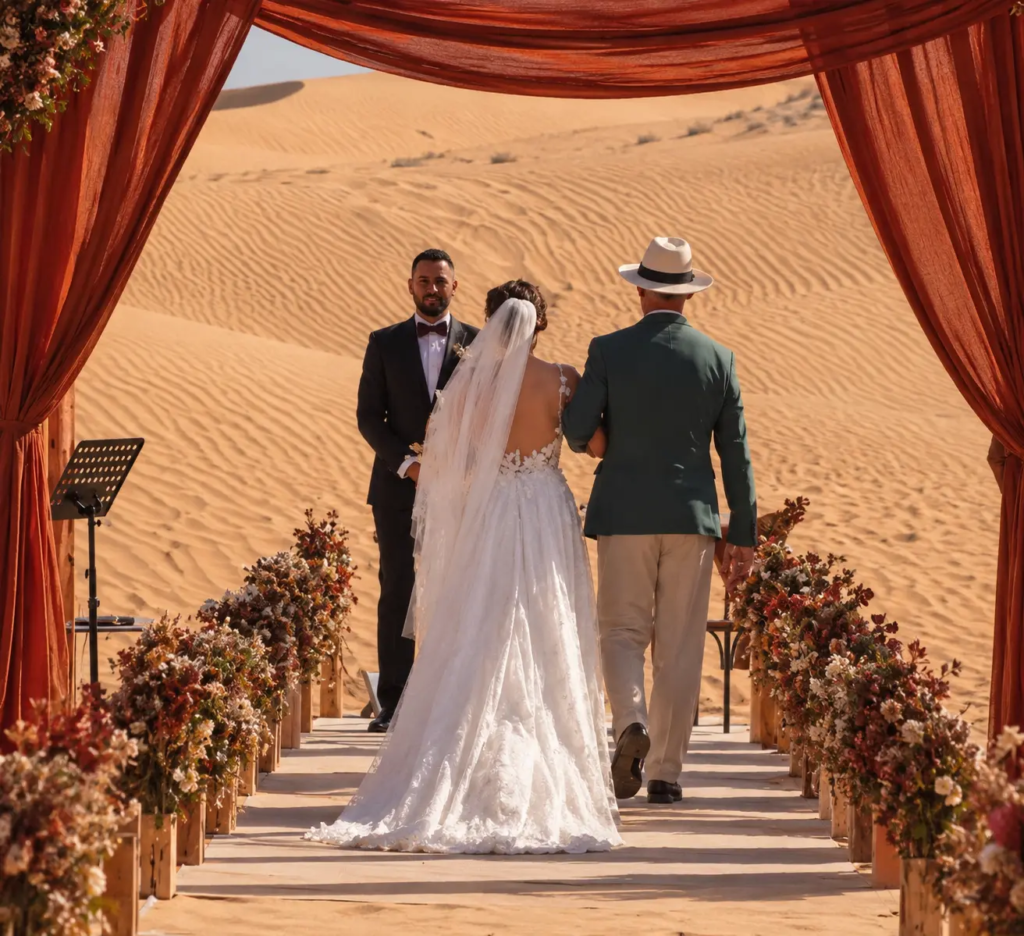
A wedding in Morocco can mean a palace garden in Marrakech, a lantern-lit camp in the Agafay Desert, a beach resort on the Atlantic coast, or a sunset ceremony on the Sahara dunes, all a short flight from Europe. This guide covers how marriage in Morocco works legally, which Morocco wedding venues suit which style, when to go, what a wedding planner can take off your hands, and how SaharaVia can arrange a Sahara desert ceremony. Treat the legal section as a starting point, since the rules depend on nationality, religion and local court.
Marriage in Morocco: Legal or Symbolic?
Most international couples take one of two routes:
- Symbolic ceremony: you marry legally at home, then hold a non-binding ceremony and celebration in Morocco. The Knot says many couples do exactly this, and Wedinspire says the international weddings its planners host are symbolic
- Legal marriage in Morocco: this runs through an adoul, a notary who witnesses marriage contracts, and the family court. The Knot calls it time-consuming and complex, and a 2024 Hespress report says no single official list of required papers exists
If you choose the legal route, expect these points:
- Documents: UK guidance lists a certificate of no impediment or marital status affirmation, a passport copy legalized by Morocco’s foreign ministry, and Arabic translations. For US citizens, The Knot adds birth certificates, police records and a medical certificate from a Moroccan doctor
- Religion rules: the same UK guidance says a groom must be Muslim or convert to Islam, and a bride must be Christian, Jewish or Muslim
- Timing: Hespress reports at least 10 days for the Moroccan steps in the best case, and the marriage permission can be valid for only two weeks
- Same-sex couples: same-sex marriage is not available, and UK travel advice states that same-sex sexual relations are illegal in Morocco, so check current advice before planning any ceremony
- Law changes: the Family Code reform announced in 2024 is still pending, with no bill filed in Parliament as of mid-October 2026, per LesMRE
The Australian embassy, for example, says it does not perform or register marriages in Morocco. Confirm the details with the adoul, the Moroccan authorities and a local lawyer. This is general information, not legal advice.
Destination Wedding Morocco: Best Places
Most destination wedding Morocco plans center on one of these areas:
- Marrakech: palaces, riads, villas and gardens around the UNESCO-listed Medina of Marrakesh, with a major airport nearby
- Agafay Desert: tented camps for ceremonies under the stars, under 20 miles (about 32 km) from Marrakech, according to The Knot
- Atlas Mountains and Ourika Valley: kasbahs and lodges with mountain views, about 37 miles (60 km) from Marrakech, per The Knot
- Taghazout and the Atlantic coast: beach resorts near Agadir for sea-view ceremonies
- Fes: riad weddings inside the medina
- Sahara dunes: the Sahara Desert near Merzouga suits a remote symbolic ceremony, but it is a long day’s drive from Marrakech, so it may suit a pre- or post-wedding trip better. SaharaVia can arrange it, as covered below
Morocco Wedding Venues
Guides name many Morocco wedding venues, from palace hotels to desert camps. These examples come from The Knot, Wedinspire and thewed and are not recommendations:
| Venue type | Typical setting | Examples named in wedding guides |
|---|---|---|
| Palace hotels | Marrakech | La Mamounia, Royal Mansour |
| Private villas and estates | Marrakech countryside | Villa Taj, Jnane Rumi |
| Kasbahs and mountain lodges | Atlas foothills, Ourika Valley | Kasbah Bab Ourika, Kasbah Tamadot |
| Desert camps and eco-lodges | Agafay Desert, Marrakech outskirts | Scarabeo Camp, La Pause |
| Riads | Fes and Marrakech medinas | Riad Fes |
| Beach resorts | Taghazout, Atlantic coast | Hilton Taghazout Bay, Paradis Plage |
- Guest numbers: guides quote up to 65 guests at Kasbah Bab Ourika, up to 84 at Kasbah Tamadot and up to 200 at Paradis Plage, so shortlist venues by guest count first
- Ask every venue: about exclusive use, on-site rooms, an alcohol license, music curfews, and a backup plan for wind or heat
Moroccan Wedding Traditions
Customs vary by region and family, but guides keep returning to these:
- Hammam: the bride visits the steam bath with female relatives before the wedding
- Henna night: women gather for music, dancing and henna on the bride’s hands, a custom linked with protection and fertility (see Henna ceremony)
- Negafa: a specialist who styles the bride and manages her outfit changes
- Amariya: an ornate platform that carries the bride into the reception
- Caftans: green and gold are popular for henna night and white for the wedding, and many brides rent outfits rather than commission custom pieces, Middle East Eye reports
- Food and music: mint tea, pastries, bastilla, chicken and lamb dishes, and live Andalusian or Chaabi music
- Late start: guests often arrive around 9 or 10 pm, so build the timeline around it
Best Time for a Wedding in Morocco
- Spring and autumn: The Knot points to March to May and September to November, and Wedinspire names May, June, September and October as the most popular months. In Marrakech, average daily highs are about 26 °C in April and 28.5 °C in October
- Summer: average daily highs reach about 37 to 38 °C in Marrakech in July and August, so plan evening ceremonies, shade and cooling
- Winter: The Knot notes off-peak savings from November to February, though nights are cold in the mountains and the desert
- Ramadan: expected to begin around 8 February 2027, with Eid al-Fitr around 9 or 10 March, depending on moon sighting. Daily life changes, so check the dates before you set a wedding window
For month-by-month weather, see our guide to the best time to visit Morocco.
Wedding Planner Morocco: What to Expect
Before you sign with a wedding planner Morocco has to offer, know what the role covers. The Knot recommends a destination wedding specialist or a destination management company to bridge language and cultural gaps.
- What they handle: venue sourcing, vendor contracts, guest transport, decor, music and day-of coordination
- Local know-how: alcohol licenses, drone permission, and realistic timelines for local vendors
- Questions to ask: portfolio and references, what the price includes, a written payment schedule, a backup plan, and whether they handle legal paperwork or only symbolic ceremonies
- Budget: The Knot cites roughly $20,000 to $30,000 for intimate weddings in smaller towns and $50,000 to $200,000 for luxury events, so treat these as rough ranges
- Savings: a one-day event, a limited bar (alcohol is pricey, per The Knot) and off-peak dates
- Payments: add a 1 to 3% buffer for currency swings and use bank transfers for large sums
- Remote planning: expect venue contact by video or email, and send save-the-dates early
Sahara Desert Ceremonies with SaharaVia
A sunset ceremony on the dunes near Merzouga, with Erg Chebbi glowing orange behind you, suits couples who want something quieter than a ballroom. It is a symbolic wedding in Morocco, so it works for elopements, vow renewals and blessings after a legal marriage at home.
SaharaVia, a family-run operator based in Errachidia, the gateway to the Sahara, can arrange a Sahara desert ceremony as part of a trip:
- Transport: private transfers from Marrakech, Fes or the airport in a Toyota TX, Mercedes Vito, V-Class or Sprinter
- Desert camp: a night in a standard, luxury or premium VIP desert camp, all with a private washroom and shower
- Arrival: a sunset camel ride, or a 4×4 transfer if you prefer
- Set-up: carpets and lanterns on the dunes, with vows read by you, a friend or a celebrant you bring
- Music and dinner: Berber drums and dinner at the camp
- Extras on request: photographer, flowers, henna evening, hair and makeup through local partners
Spring and autumn are the most comfortable seasons in the dunes, and the Ramadan and alcohol notes in this guide still apply. Email your date and guest count to saharaviatravel@gmail.com, and SaharaVia will send an itinerary and a quote.
Practical Rules for the Wedding Day
- Alcohol: UK travel advice says drinking anywhere other than a licensed restaurant or bar is illegal, so confirm the venue’s license before planning a bar
- Drones: UK advice says you need permission from the Directorate General for Civil Aviation, and other sources report customs seizures, so ask your photographer to sort permits first
- Photography: avoid photographing sensitive political or military sites, and keep couple portraits discreet in public, since UK advice asks visitors to avoid public displays of affection
- Guest travel: flights from the UK take about 3 hours and New York to Casablanca is under 7 hours direct, per Wedinspire and The Knot. Point guests to our Marrakech Airport guide for arrival details
- Guest dress: modest and elegant works best, and our guide on what to wear in Morocco covers the details
Frequently Asked Questions
How much does a wedding in Morocco cost? The Knot cites roughly $20,000 to $30,000 for intimate weddings in smaller towns and $50,000 to $200,000 for luxury events. Venue, guest count, travel and alcohol drive the total.
Can foreigners have a legal marriage in Morocco? It is possible, for example with a Moroccan partner, but it runs through an adoul and the family court and depends on nationality and religion. UK guidance does not say whether two foreigners can marry legally in Morocco, so check with your embassy.
Is a symbolic wedding in Morocco legally binding? No. A symbolic ceremony is non-binding, so couples complete the legal marriage at home, before or after the celebration.
Can you have a wedding ceremony in the Sahara Desert? Yes, as a symbolic ceremony. SaharaVia can arrange one in the dunes near Merzouga, with transport, a camp stay, Berber drums and dinner. It is not legally binding, so marry legally at home or through an adoul.
When is the best time for a wedding in Morocco? Spring and autumn are the usual picks, with May, June, September and October the most popular months. Summer is hot, and Ramadan changes daily life.
Do you need a wedding planner in Morocco? It is not a legal requirement, but a local planner or destination management company helps with language, vendors and logistics, especially when you plan remotely.
What are the best Morocco wedding venues? Marrakech palace hotels and villas, Agafay and Atlas kasbahs and camps, and Atlantic beach resorts are most common. Choose by guest count and season.
Can you serve alcohol at a wedding in Morocco? Only at licensed venues, according to UK travel advice. Confirm the license in writing and expect higher drink costs.
Conclusion
A wedding in Morocco works best when you separate the legal marriage from the celebration, match the venue to your guest list and season, and bring in local planning help early. If the Sahara is on your list, email saharaviatravel@gmail.com and SaharaVia can arrange a symbolic ceremony in the dunes.