
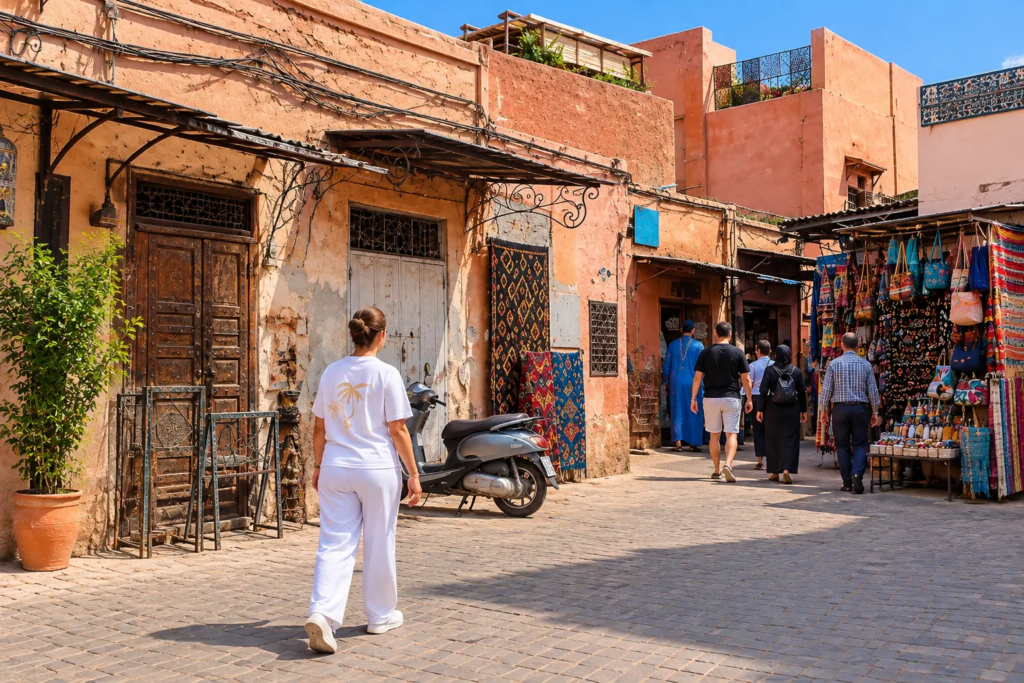
Knowing how to behave in Morocco makes a trip smoother and the welcome warmer. Hospitality is central to Moroccan social life, and a few habits around greetings, dress, religion and photography go a long way. This guide covers Moroccan cultural norms, Moroccan etiquette for tourists, the main dos and don’ts in Morocco, and public behavior in Morocco that can affect you legally. Rules come from official advice (the GOV.UK Morocco travel advice updated 19 August 2026, Canada 26 May 2026, Germany’s Federal Foreign Office in early November 2026) and travel guides, so check current advice before you fly.
Moroccan Cultural Norms: The Basics
These Moroccan cultural norms explain most of the rules in this guide:
- Respect for religion and tradition: Canada’s advice asks visitors to dress conservatively, behave discreetly and respect religious and social traditions
- A conservative society: the German Federal Foreign Office says most of society is socially conservative, and the Rough Guide notes that men traditionally dominate the street
- Hospitality: mint tea accompanies “every social occasion”, according to GoNOMAD, and home invitations can come without notice
- City and village: Frommer’s says upscale restaurants in Casablanca and Marrakech allow a more relaxed dress code, and the Rough Guide expects more cover in rural areas
- Local dress as a guide: the Rough Guide says “the best guide is to note what locals wear, and dress likewise”
Moroccan Etiquette for Tourists: Greetings and Hospitality
- Greetings: use your right hand and ask about the person’s health and family, per Frommer’s. Cheek-kissing is common between same-sex friends, not between men and women unless they know each other well
- Food offers: Frommer’s suggests politely declining first and accepting a small portion if the host insists. GoNOMAD cites the Darija word “safi” for “that is enough”
- Home visits: remove your shoes and bring a gift such as pastries, as the Rough Guide and Journey Beyond Travel advise
- Shared dishes: eat with your right hand and take only the part in front of you
- The left hand: it is seen as unclean, so avoid it for eating, greeting or handing over food
Public Behavior in Morocco
Some public behavior in Morocco is courtesy and some is law. These points come mostly from official advice:
- Affection: GOV.UK asks visitors to avoid showing affection in public, particularly near religious sites and in tourist areas. An American expat blogger writes that such rules are rarely enforced against foreign couples, but she still advises keeping it minimal. Tatonka notes that same-sex friends commonly hold hands and hug
- Unmarried couples: GOV.UK says the rules on sex between unmarried people do not generally apply to visiting foreigners, yet the German Federal Foreign Office says hotels may ask unmarried couples for a marriage certificate. Ask your hotel before you book
- Same-sex relations: they are illegal, per GOV.UK and Canada, and the German Federal Foreign Office adds that foreigners can be prosecuted
- Alcohol: GOV.UK says drinking in the street or anywhere except a licensed restaurant or bar is illegal and can lead to arrest. Canada says licensed stores sell alcohol for private consumption
- Drugs: Morocco has a zero-tolerance approach, including cannabis, and GOV.UK warns of severe penalties even for transit
- Politics: the German Federal Foreign Office advises restraint with political opinions in public, and Frommer’s lists the royal family, Western Sahara and Algeria as topics to avoid
Moroccan Etiquette for Tourists: Dress Code
The Rough Guide describes modest dress as covering wrist to ankle for women and shoulder to below the knee for men. GOV.UK asks women for loose clothing that covers arms, legs and chest.
- Men: a T-shirt or collared shirt and long trousers work almost everywhere
- Women: loose trousers or a long skirt with covered shoulders, and a scarf for mosques if you need one
- Beaches: Tatonka says regular swimwear is fine, while topless sunbathing is not accepted
Our guide on what to wear in Morocco has a full packing list.
How to Behave in Morocco Around Religion and Ramadan
- Mosques: the Rough Guide says most are closed to non-Muslims, with exceptions such as the Hassan II Mosque in Casablanca. Do not approach shrines or walk through graveyards
- Religious talk: GOV.UK says public criticism of Islam can bring heavy fines and up to 2 years in prison, and that attempting to convert a Muslim or distributing evangelical literature is illegal
- Ramadan: it is expected to begin around 7 or 8 February 2027, with Eid al-Fitr around 9 or 10 March, depending on moon sighting. GOV.UK says eating, drinking, swearing, smoking or chewing gum in public in the daytime may cause offence
- Restaurants in Ramadan: the German Federal Foreign Office says those serving food by day are exempt, but office hours may be shorter
See our guide to the best time to visit Morocco if Ramadan affects your dates.
Public Behavior in Morocco: Photography and Drones
- People: GOV.UK says to always ask permission before taking pictures of people, especially children. Tatonka adds that an outstretched palm can mean no photos or that a tip is expected
- Sensitive sites: it is illegal to take photographs near sensitive political or military sites, per GOV.UK, and Frommer’s adds border checkpoints, police and airports
- Mosques: Frommer’s says photographing the outside is usually fine, but do not get close or appear to photograph the interior
- Drones: GOV.UK says you need permission from the Directorate General for Civil Aviation, while the German Federal Foreign Office says importing drones is strictly banned and customs confiscate them. Check before you pack one
Dos and Don’ts in Morocco: Shopping, Bargaining and Tipping
- Bargaining: Tatonka says to decide what an item is worth first and open at about a third of the seller’s price. Never ask a price if you have no plan to buy
- Baksheesh: small tips are expected for directions, photographing a stall or unsolicited guiding, per Tatonka
- Tipping: the Rough Guide gives these figures, which may have risen since:
| Situation | Suggested tip |
|---|---|
| Café | About 5 dh per person |
| Moderate restaurant | About 20 dh |
| Upmarket restaurant | 10 to 15% |
| Museum or monument attendant | 5 to 10 dh |
| Parking attendant | About 5 dh |
| Fuel station attendant | 5 to 10 dh |
| Luggage porter | About 20 dh |
| Taxi | Not expected but appreciated |
Guides, Touts and Scams
- Fake guides: GOV.UK warns that people posing as official guides harass tourists, so check for an official badge and local permission in historic districts
- Scams: card fraud and confidence tricks are common, and aggressive begging is too, per GOV.UK
- Unsolicited help: Tatonka says it usually ends in a request for money and warns against claims that a passage is closed
- A polite no: say no firmly, agree any price in advance and keep small change handy. If Marrakech is on your route, see the best things to do in Marrakech
How to Behave in Morocco as a Woman or Solo Traveler
- Be polite but formal: the Rough Guide advises avoiding physical contact with Moroccan men and notes that smoking in public may be read as availability
- Ask for help: it suggests shouting “Shooma!” (shame on you) to draw bystanders if a man touches you
- Stay alert: the German Federal Foreign Office advises solo women to behave reservedly and stay appropriately wary
Moroccan Cultural Norms in the Sahara and Desert Camps
SaharaVia, a family-run operator based in Errachidia, the gateway to the Sahara, runs private trips with a sunset camel ride, Berber drums and dinner at camp. A few habits help there:
- Accept tea if offered: GoNOMAD says mint tea accompanies every social occasion
- Join in: the Berber drums and dinner are shared moments, so put the phone down
- Ask before photographing: guides, camel handlers and villagers deserve the same courtesy as anyone else
- Dress for village stops: keep shoulders and knees covered on the way, and pack layers for cool desert evenings
Read our Sahara Desert guide to plan the trip. Your driver and camp hosts can also explain local customs on the spot.
Frequently Asked Questions
How should tourists behave in Morocco? Dress modestly, keep affection discreet, respect Islam, ask before photographing people and say a polite no to touts. The Culture of Morocco page gives broader background.
Can you hold hands or kiss in public in Morocco? Officials advise avoiding public affection, and GOV.UK names religious sites and tourist areas in particular. An expat blogger says holding hands and brief hugs are acceptable for foreign couples, but the safest choice is to keep it minimal.
Can tourists drink alcohol in Morocco? Yes, in licensed restaurants, bars and hotels. Drinking in the street or elsewhere is illegal and can lead to arrest, per GOV.UK.
What should you not do in Morocco? Do not use your left hand for eating, photograph people without asking, criticize Islam, take drugs or fly a drone without checking the rules.
Do women have to cover their hair in Morocco? No. Tatonka says headscarves are not required except in mosques, where a loosely looped scarf is enough. Loose clothing that covers arms, legs and chest is the standard advice.
How much should you tip in Morocco? Small amounts: about 1 dh in a café, 10 to 15% in upmarket restaurants and a few dirhams for attendants, according to the Rough Guide.
What are the main Moroccan cultural norms? Hospitality, respect for Islam, modest dress and polite greetings with the right hand. Public behavior in Morocco is more reserved than in much of Europe. For more background, see our amazing facts about Morocco.
Conclusion
The dos and don’ts in Morocco come down to modest dress, discreet affection, respect for religion, permission before photos and a polite no to touts. If you want local hosts who know the customs, email saharaviatravel@gmail.com and SaharaVia will send an itinerary and a quote.